Yahi tohafa hai yahi nazarana
main jo aawara nazar laya hun
rang mein tere milane ke liye
qatara-e-khun-e-jigar laya hun
ae gulabon ke vatan
pahale kab aaya hun kuch yaad nahi
lekin aaya tha qasam khata hun
phul to phul hain kanton pe tere
apne honton ke nishan pata hun
mere khwabon ke vatan
choom lene de mujhe hath apne
jin se todi hain kai zanjiren
tune badala hai mashiyat ka mizaj
tune likhi hain nai taqdiren
inqalabon ke vatan
phul ke bad naye phul khilen
kabhi khali na ho daman tera
roshani roshani teri rahen
chandani chandani aangan tera
mahatabon ke vatan
Mere dil mein tu hi tu hai dil ke dawa kya karun
Mere dil mein tu hi tu hai dil ke dawa kya karun
dil bhi tu hai jan bhi tu hai tujhape fida kya karun
khud ko khokar tujh ko pa kar kya kya mila kya kahun
tera hoke jine mein kya kya aaya maza kya kahun
kaise din hain kaisi raten kaisi fiza kya kahun
meri hoke tune mujhko kya kya diya kya kahun
meri pehlu mein jab tu hai phir main dua kya karun
dil bhi tu hai jan bhi tu hai tujhape fida kya karun
Hai ye duniya dil ke duniya milake rahenge yahan
lutenge hum khushiyan har pal dukh na sahenge yahan
armanon ke chanchal dhare aise bahenge yahan
Ye to sapanon ke jannat hai sab hi kahenge yahan
ye duniya mere dil mein basi hai dil se juda kya karun
dil bhi tu hai jan bhi tu hai tujhape fida kya karun
Itna to zindagi mein kisi ke khalal pade
Itna to zindagi mein kisi ke khalal pade
hansane se ho sukun na rone se kal pade
jis tarah hans raha hun main pi-pi ke ashk-e-gam
yun dusara hanse to kaleja nikal pade
ek tum ke tum ko fikr-e-nasheb-o-faraz hai
ek hum ke chal pade to baharahal chal pade
muddat ke bad us ne jo ke lutf ke nigah
jee khush to ho gaya magar aansu nikal pade
saqi sabhi ko hai gam-e-tashnalabi magar
may hai usi ke naam pe jis ke ubal pade
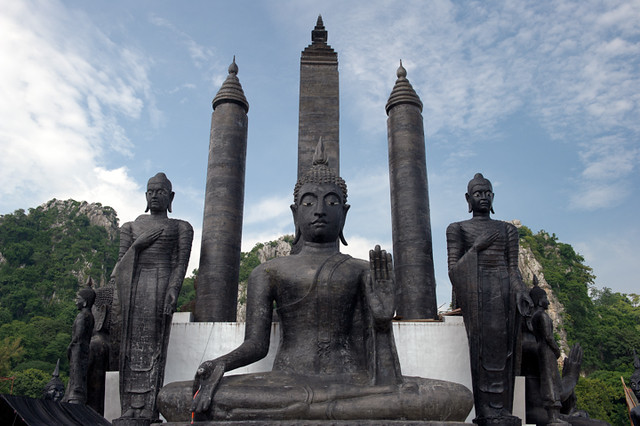
Who is Suffering from Incurable Diseases , Please Do visit in This Link, I am Sure You'll Get Help !! :) http://holistic-health.org/ Wat Thamkrabok is a faraway place for the very far gone. The Buddhist
monastery is set against a Thai landscape that resembles an idyllic
Oriental watercolour: all stony outcrops and forested peaks. Gargantuan
statues rise out of the foliage like fevered hallucinations. Packs of
stray dogs snarl at strangers who are not clad in the brown monks' robes
or the faded red pyjamas worn by the dozen drug abusers who are staying
here. The word "Winner" is spelled out hopefully in ancient Buddhist
script on the shirtbacks of these addicts who are undergoing the world's
most extreme - yet possibly most effective - drugs rehabilitation
regime.
Outside the monastery, many have long been written off as
losers. Hundreds of long-term speed freaks, pill poppers, crack addicts,
junkies, glue-sniffers and alcoholics arrive at this stark Buddhist
waystation in central Thailand every year to endure a gruelling
programme of purging and spartan living. While in the West, the vast
majority of detox patients eventually succumb to their drug cravings,
nearly 70 per cent of the tens of thousands of troubled men and women
who have been through treatment at Wat Thamkrabok since 1958 have
managed to stay drug-free, according to one Australian study. But the
place is a far cry from such celebrity-friendly detox haunts as the
Priory or Betty Ford clinic. The temple's brutal vomit cure proved too much for the musician Pete
Doherty, the self-destructive frontman of the Libertines punk thrash
band, who earlier this month bolted before dawn on day three of his
10-day detox treatment. He ran away with another English addict who
claims he cut short his own rehabilitation just two days before it was
due to come to an end in order to give the angst-ridden guitarist "moral
support". Doherty surfaced briefly in Bangkok before jetting home, only to be
arrested for reckless driving and possessing a flick knife. Worried
about the health of their lead singer, the Libertines were forced to
cancel performances at Glastonbury last weekend as well as at the Isle
of Wight Festival. The band was recently rated the top indie group in
Britain by NME magazine, and their new single is, rather prophetically, titled "Can't Stand Me Now". "The singer seemed unwilling or unable to let go of his dark side," says Phra Hans, a Swiss spiritual counsellor at Thamkrabok. A statement signed by Doherty before he fled says: "Thamkrabok
Monastery have done everything they could to help me, but I am not
strong enough for this treatment." Suffering withdrawal pains to the strains of a pop star howling out
taunting heroin lyrics such as "The horse is brown/come on round" proved
divisive for newcomers in the monastery's drug-treatment compound. All
but one persisted with the rhythmic vomiting and herbal steam baths
designed to accelerate the body's purification and ease withdrawal
symptoms. The noisy celebrity in their midst was soon gone. His next
stop would be a gig at Filthy McNasty's pub in London. "When we lost the two English lads it was very disheartening," says
Richard, an ex-convict from Leeds, who kicked his own £3,000-a-week
"smack and crack habit" seven months ago and is now a monk at
Thamkrabok. "It's just a waste. If this guy ever gets off heroin, he
might be a superstar. His family and friends sent him here and he must
have been trying to please them. You gotta truly believe in yourself,
that you can acquire good habits as easily as bad habits. The process
has to be painful so you will not want to go through it ever again. He
was not ready for it. It is the toughest detox you will find, and I have
tried them all." Some 40 per cent of the monks here are former addicts who have stayed
on at Thamkrabok to become ordained. With cigarettes dangling from
their mouths, some look decidedly impious, but the abbot, Charoen
Panchand, allows them to taper off gradually from nicotine dependence.
Patients line up once a day to swallow a shot glass of a
mouth-curdlingly bitter herbal extract which leaves them retching and
spewing into concrete gutters. The organic purgative is a viscous dark
brew made from 108 seeds, leaves, and tree barks that can be foraged
locally. The secret formula is said to have come to Luang Poh Yai, the
visionary aunt of the abbot, in a dream, and is administered free of
charge to all comers. Gulping water from a pail, and violently expelling
a great plume of vomit can elicit applause from the gaggles of
spectators who are brought in to witness the wretched fight their drug
demons at public "vomit shows". Monks who take a daily dose to expel any toxins remaining in their
bodies offer tips on the proper stance for projectile vomiting. Shoving
fingers down the throat won't always speed the process. Knocking back
copious amounts of water is better. First-timers used to be encouraged
to vomit to the accompaniment of drums, but silent sessions are now the
norm. The mere sound of retching induces others to follow suit. Most of the participants are Thais, but a growing proportion of the
addicts are middle-class Europeans who have relapsed after gentler
treatment at medical clinics back home. The National Health Service has
even agreed to fund selected patients to attend the programme. At
Thamkrabok there are no chemical crutches, no night nurses, no
sleeping-tablets, no guarantees. No Aids tests are required, either.
Methadone addicts suffer immensely. Because the synthetic opiate has a
longer half-life in the brain, it's more insidious than heroin, with
which it is often combined. Nathalie, a 22-year-old from Sheffield who
has been an addict since the age of 16, told me how she thrashed
sleeplessly night after night, fighting off the sensation of worms
writhing in her bone marrow. Wandering off the premises is forbidden, as
the highway to Bangkok is just 10 minutes walk away and illicit drug
offers are plentiful, even before you reach the nearest village. One strapping Australian hooked on methadone once remained awake for
48 days straight, according to Phra Hans. Rhythmic sweeping helped
soothe his jangled nerves, and now a "broom meditation" is incorporated
in the programme. If addicts are able to stand upright, they must rise
at daybreak to sweep in unison. Last week, five Britons turned up for the monastery's radical detox
regime. Jet-lagged after a 13-hour flight, they must cope simultaneously
with withdrawal symptoms and extreme culture shock. Despite its
picturesque backdrop, the monastery is built on a flyblown site wedged
between pock-marked hills, a quarry, and a teeming refugee camp where
Hmong hilltribes from Laos have lived under armed guard for three
generations. Even though daily herbal steam baths and Thai massage are
on offer to ease bodies racked by convulsions, by no stretch of the
imagination can Wat Thamkrabok be described as a spa. "At Bangkok airport, I noticed two guys on their way out," says
Austin, a trembling addict from Yorkshire in his third day of rehab.
"You could tell they were both on heroin. You could smell it on them.
They spoke English and I was tempted to ask them where to score one last
time, before I came here to dry out. "I was a bit shocked when we arrived," he confesses. "I thought it
would be some majestic place in the mountains, and there were all these
chickens pecking around and lizards in the rooms." The dormitories for
foreigners have scrubbed tile floors and patched mosquito nets draped
over the simple cots. No mobile phones are allowed, because addicts must
sever all ties with their drug-taking past. For the moment, the use of
personal stereos is controversial. Music helps many people deal with the
rigours of rehabilitation, but the more orthodox monks worry that music
associated with past drug experience can create "a toxic womb" that
keeps reality at bay. Bathing is accomplished with a jug of rainwater
and a basic metal bowl. Feeling rough and seeing double, Austin says that when he was offered
a massage on his first day at the monastery, he anticipated gentle
caresses from the petite masseuse. Instead, the 29-year-old former army
cook was painfully thumped and poked. "It felt great after she stopped,
though," he admits, "and by this time, at the rehab place I went to
before this one, I was hurting a lot more than I am now. It must be the
herbs." The rigorous detoxification process requires addicts to take the
purgative elixir for the first five days. Alcoholics or opium addicts,
who risk vomiting blood, are given black herbal pastilles instead. The
monastery's sexagenarian herbalist, Wala Yanghun, gathers fresh
ingredients from the garden and brews the bitter black medicine in a
vat. Visitors who use the monastery steam baths in the afternoon drink a
diluted tea made to the same formula. It tastes revolting, rather like
castor oil churned with coffee grounds, pond scum, and laced with
Fisherman's Friend lozenges. It was in the early Sixties that the outreach programme at Wat
Thamkrabok took off, when opium addiction was becoming a widespread
problem. Wandering hippies who completed the programme spread the word,
and foreign addicts began to arrive unannounced. Its popularity peaked
in 1997, linked to a boom in methamphetamine addiction. More than 2,000
desperate addicts requested help from the abbot to quit. Numbers have
since dropped, but more than 400 people detoxed at the monastery last
year, and 125 have passed through since January this year. Sajta, the sacred vow of abstinence, is as much a key as the
medicine, Phra Hans explains. If addicts treat it frivolously and go
back on their promise, the monastery will not excuse them. No second
chances at detox are possible. Thamkrabok is not a clinic with a
revolving door. After a week, the abbot dispenses a kahtah, a
divine phrase that must be committed to memory and repeated in case of
temptation. The holy paper is swallowed by the addict. Unlike a classic 12-step programme, in which addicts place
responsibility for their lives in a greater power, the Thamkrabok way
stresses the importance of experiencing all the agonies of withdrawal.
Through pain, the addicts can forge mental strength to figure out what
drove them to seek oblivion in drugs or drink. Addicts are not
encouraged to consider themselves victims, but must will themselves to
be stronger than the substances they crave. Phra Hans likens the detox programme at Thamkrabok to the epic
journey of the hero. On his quest, a hero must seek out an alien place
and humbly accept the help of strangers in order to return home
transformed. Well, if nothing else, Thamkrabok is quintessentially alien. Rather
than meditate in quiet repose, the recovering addict monks are kept busy
realising the abbot's eccentric visions. They have built a 100-ton
water wheel that may eventually be put to use on Bangkok's canals, as
well as a mammoth speedboat, which perches unfinished in the monastery
grounds. Towering statues of Buddha, elephant-headed sculptures, and
outsize busts of the abbot's spectacle-wearing aunt are scattered about
the grounds. The bodies of the abbot's deceased siblings are now at rest
inside hefty coffins here, and are embalmed in homemade fluid, which
the monks are required to change regularly.
If Austin and his four British roommates can endure the hardships of
this brutal purge, and journey with their Thai colleagues through all
the paranoia and the pain, their task is indeed heroic.
Minimumweight Mangte Chungneijang Merykom Born 1 March 1983 (aka Mary Kom or MC Merykom) is
from Kangathei Village, Moirang Lamkhai in rural Manipur, India. Her interest in
boxing was inspired by the success of Manipuri male boxer Dingko Singh.
She took to sports in an effort to provide some financial support to her family.
"I was initially an all-round athlete, and 400-m and javelin were my pet events.
When Dingko Singh returned from Bangkok (Asian Games) with a gold, I thought I
should give it a try. Dingko's success triggered a revolution of sort in Manipur
and surprisingly I found that I was not the only girl who was drawn into
boxing," she said.
She began boxing in 2000 and was a quick learner who preferred to be put through
the same paces as the boys around her. "In just two weeks, I had learnt all
the basics. I guess I had God-given talent for boxing."
She initially tried to keep her interest in the sweet science from her father,
M. Tonpu Kom, and mother Saneikham Kom, but winning a 2000 State championship
got her photograph in the newspaper - and her secret was out of the bag:
"I still remember I was castigated by my father who said with a battered and
bruised face, I should not expect to get married. He was furious that I took to
boxing - a taboo for women - and he did not have the slightest idea about it.
But my passion for the sport had got the better of me and I thank my cousins who
coaxed and cajoled my father into eventually giving his nod. I'm happy that I
did not let anybody down," she told the Deccan Herald in September 2004.
After winning her first title and Best Boxer at the First State Level Invitation
women's boxing championship in Manipur in 2000, Merykom went on to win the gold
in the Seventh East India Women’s Boxing Championship held in West Bengal and
subsequently to win five Indian National Championships from 2000 to 2005.
She also embarked on an international campaign that has brought her a series of
gold medals and honors, though not without a few setbacks.
On her way by train to the selection camp for her first Asian Women’s Boxing
Championships in Bangkok, Thailand, she had all her luggage and her passport
stolen. Her parents asked her to come home but she carried on her course. "My
saviour was a city-based uncle, who said he’d fix everything if I got selected.
I did, but I returned empty handed (from the meet in Bangkok). The stress
following the loss of documents and luggage interfered with my training."
Her solution was still more training. "We girls really worked hard. Women’s
boxing was a very recent introduction, and we really wanted to excel."
Merykom's "international gold rush" finally began with the Second Asian Women's
Championship in Hissar and continued with a win in the Third Asian Women's
Championship held in Taiwan.
In her first AIBA World Women's Boxing Championship in Scranton, USA in 2001,
the 18-year-old Merykom had to settle for silver, losing to Hulya Sahin of
Turkey by 13-5 in the 48-kg final after defeating Jamie Behl of Canada by 21-9
in the semi-final and Nadia Hockmi of Poland by RSCO-3 in the quarter-final.
"She was leading in the first round but her opponent managed
to score points in the final round," coach Anoop Kumar said of Merykom's
performance in the final.
The next year, she struck gold at the Second AIBA World Women’s Senior Boxing
Championship held from October 21-27, 2002 in Antalya, Turkey, winning the 45-kg
division by defeating Svetlana Miroshnichenko of the Ukraine in her semi-final
and Jang Song-Ae of North Korea in the final
On November 22, 2003 in the 46-kg finals of the Asian Women's Championships at
Mahabir Stadium in Hisar, India, she defeated Chou Szu Yin of Chinese Taipei by
RSCO-2. She had previously defeated L. G. Chandrika of Sri Lanka also by RSCO-2.
Her
once-skeptical father accompanied his trail-blazing daughter to the ceremony in
2003 at which she was the first woman ever to receive India's prestigious Arjuna
award for her achievement in boxing.
She also took gold in the 46-kg division of the Women's World Boxing Tournament
in Tønsberg, Norway from 27 April to 2 May 2004, defeating Derya Aktop of Turkey
by RSCO-2 in the semi-final and Xia Li of China by RSCO-2 in the final.
She was also the Witch Cup Tournament champion in Hungary in 2004.
At the August 2004 Asian Women's Boxing Championships in Taiwan she
defeated Gretchen Abaniel of the Philippines 35-11 in the 46-kg final.
She successfully defended her 46-kg world title at the Third AIBA Women's World
Championships held from 25 September to 2 October 2005 in Podolsk, Russia. She
won the final by a 28-13 score over Jong Ok of North Korea, who had reached the
finals with a 22-20 decision over Gretchen Abaniel of the Philippines. Kom had
defeated Elena Sabitova of Russia 31-16 in her semi-final and Nancy Fortin of
Canada 30-13 in her preliminary. While she saw her repeat win as great progress,
she expressed admiration for the Russians, who won the team event.
"They are so well-built, with big muscles!"
On 19-22 October 2006 at the Venus Box Cup in Vejle, Denmark, Merykom won by
RSCO-2 over Sofie Molholr of Denmark in the 46-kg semi-final and defeated
Steluta Duta of Romania by retirement in the third round. Duta had defeated
Valeria Calabrese of Italy RSCI-2 to reach the final and had also won the 46-kg
division of the Ahmet Comert Tournament in 2006 with a RSCO-2 over Derya Aktop
of Turkey (Merykom did not compete in that tournament.) On 23 November 2006 at the AIBA World Championships at
Talkatora Indoor Stadium in New Delhi, India
Merykom again won the 46-kg division - this time with a 22-7 decision over her
Venus Box Cup final opponent Steluta Duta of Romania. Merykom kept the Romanian
on the defensive for most of the bout, then celebrated her win with a
demonstration of Manipuri folk dance in the ring. Duta reached the final with a
RSCO-2 win over Boranbayeva Zalgul of Kazakhstan in the semi.
In New Delhi, Merykom had previously defeated Jong Ok of North Korea 20-8 in the
semi-final, and Chandrike Geruga of Sri Lanka by RSCO-2 in the quarter-final
after a bye in the preliminary round. She began the tournament with a
cough and fever (and was unable to take any medication because of the doping
test) but she still performed well enough to lead Chandrike Geruga 13-3 after
one round, and the bout was stopped in the second with Merykom ahead 19-4.
"Everyone in our team worked very hard for this day and it is good to see
that we have achieved it on our home soil," she said. On this occasion the
Indian women's boxing team edged the formidable Russians by 34 points to 28 in
team standings.
Like most world-class amateur female boxers, Merykom now hopes to compete in the
Olympic Games some day. "Now I will dream again to represent India in the
Olympics at least once till the time my body permits."
On her ring strategy, Merykom says "I simply try to cramp my opponents so
that they don't get any chance to free their arms. 'My height (around five feet)
is a problem but my fitness is my advantage. I make my opponents run a lot in
the ring, which tires them.' In 2005 she told a felicitation program
organized by Indian Amateur Boxing Federation and YMCA:
"I do not only rely on my technique or strength but also on my mind," adding
that in her 46-kg weight category "I mostly meet different boxers in my
weight category as the older ones change to higher weight category. But I have
established myself here."
"To be
a successful boxer one must also have a strong heart. Some women are physically
strong but fail when it comes to having a strong heart. One also must have the
zeal and the right fighting spirit," says Merykom. "We work
harder than men and are determined to fight with all our strength to make our
nation proud. God has given me the talent and it’s only because of sheer grit
and hard work that I have made it so far."
Merykom works out five to six hours a day to stay fit. Coming from a poor family
who struggled to educate her siblings, her success as a world champion is a
testament to her determination, perseverance and drive to succeed. She has used
her earnings from boxing to obtain a new house and land for her parents and
savings deposits for her younger siblings but she bemoans the lack of
sponsorship for Indian female boxers, saying "I guess that’s because I don’t
play tennis or cricket. Seriously, are there no other sports in India?"
She has said that she would eventually like to share her boxing experiences
while grooming new sports talent in Manipur.
A COURTESY OF www.wban.org
This is Not That Filmy "Dhai Kilo Ka Haath " , This is Solid Punch of Real Life of A Women of Lion Heart. This Mary of No Mercy Brings Medals For Country and Loves INDIA as Like as Mother Mary .
Keep Up This Tashan Mary !!! Mmmmmmuuaahhh :O :D <3<3<3
Swagatalakshmi Dasgupta is an inevitable name in the divine world of
Rabindra Sangeet since the 90's.
She is an M.A. (Music) from, Rabindra Bharati University took her lesson
in classical music from her father Shri Pabitra Dasgupta and Rabindra
Sangeet from Smt. Maya Sen.
She is an 'A' grade artist of AIR and TV. She stood first in All India
Singing Talent Contest in 1985, Rabindra Sangeet and Bhajan in All India
Radio Music Competition (Akashbani) in
1986 Rabindra Sangeet and Atul Prasadee both in West Bengal Rajya Music
Competition in 1986. She was invited by the Tagoreans, London to perform
in London and Belgium in 1989-90. Besides Rabindra Sangeets, she has shown her excellence in different
fields of music, like, Sanskrit hymn (musicised by herself), south
Indian and English, Scottish &
Irish original songs of the transcreated songs of Tagore. How accurate
and overwhelming those representations are, may be well known to one,
who has listened both of her albums named,
"Sagarparer Haoyay(1996)" and "Dakhin Haoya(1999)".
Swagatalakshmi has recorded the entire "Geetabitan" of
Rabindranath Tagore, containing about 2023 songs, alone in a single
album, named "Ekla Geetabitan" in 2006. The only instrument used is a
Tanpura and Tabla. 'EKLA GEETABITAN' is available only from
"ASHOKERENU".
The recording was started from February 9 and ended successfully in
June 23 of the same year in only 105 days. A historical record of
singing 118 songs on a day was made during her recording.
She attended Banga Sanskriti Sammelan in America (USA) in the year 2003
and was again invited by the Tagoreans in the year 2003 in UK, by
Canadian Bango Sammelan in the year April 2004 in Canada organised by
Bengali Association of Canada. She has also performed Bhajans and
Devotional Songs in Different Temples of Gujrati & South Indian
Temples in Abroad. She is now one of the most glittering stars in the
limitless sky of Rabindrasangeets. She is able to snatch away the heart
of audience from the petty worldly matters through her completely
devoted rendering (playing herself only a keyboard as the instrument )in
the pin-drop silence & tranquility of the hall and it goes on
ringing in the mind even after a long time, while in leisure. Here is
the mystery behind her fame. Without her, the sphere is incomplete.
Besides,
she is also renowned for enchanting recitation. She also writes nice
poetries during leisure. Four books of her poetries namely, "Akasher
Gaan", "Duyoranir Chithi" etc. have been already published. Her story
"Kakhon Basanto..." was published in Rabibashariyo of Anandabazar
Patrika.
Her devotion, sincerity and perseverance to maintain the
accuracy of Rabindra Sangeet, Her versatility and fluency in all
spheres of art has awarded her with enormous fame.
A COURTESY OF grbaonline.org
When She Sings MA SARASWATI resides in Her Tongue, When She Sings Every Lyrics Get Converted in The Sacred Chanting ! :) When She Sings The Atmosphere of Any Situation Becomes Blessed, Her Singing is not Just An Art or Creativity , It is Seems & Feels Worship of Music. The Essence of Divinity with Pure Dedication, That is Describes SWAGATA LAXMI. My Sangeet Guru & Icon of Music. A Little Tribute to Her !!! LOVE YOU DIDI <3 <3 <3 :)